
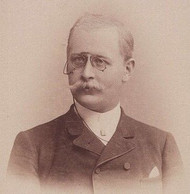
Ferdinand Küchler and the Art of the Student Concerto
Posted by Paul Wood on 30th Jan 2026
If you teach violin or grew up learning it, there’s a good chance the name Ferdinand Küchler is quietly woven into your musical story. His Concertino in G or Concertino in D may have been your first taste of “a real concerto” – the moment when studies and pieces began to grow into something more orchestral and expansive.
At MyMusicScores we’ve been investing time researching composers whose music sits at that crucial intersection between technique and artistry. Küchler is one of those figures: not a headline name in the concert hall, but a giant in the teaching studio.
Today, that legacy lives on not just in teaching studios and exam syllabuses, but also in practical, performance‑ready editions. At MyMusicScores you’ll find string‑orchestra arrangements of Küchler’s core violin concertinos for developing players:
- Küchler: Violin Concertino in G major, Op. 11 for Violin and String Orchestra
- Küchler: Violin Concertino in D major, Op. 12 for Violin and String Orchestra
- Küchler: Violin Concertino in D major, Op. 14 for Violin and String Orchestra
- Küchler: Violin Concertino in D major, Op. 15 for Violin and String Orchestra
Each of these takes Küchler’s original violin‑and‑piano concertinos and reimagines the accompaniment for string orchestra, giving young soloists the chance to experience a true concerto partnership with an ensemble.
Let us takes a closer look at who he was, why his music still appears in modern exam syllabuses, and what makes his student concertos so effective for developing players.
Who Was Ferdinand Küchler?
Ferdinand Küchler (1867–1937) was a German violinist, violist, conductor and pedagogue whose career spanned the end of the Romantic era and the beginning of the more “scientific”, physiological approach to instrumental technique in the 20th century.
He trained at the Hoch Conservatory in Frankfurt, studying with leading figures of the German violin tradition such as Hugo Heermann, a pupil of Joseph Joachim and an important interpreter of Brahms. This placed Küchler firmly in the Brahms–Joachim line: serious, architecturally clear, and suspicious of empty showmanship.
After conservatory life he worked as a principal violist in Basel, played chamber music at a high level, and discovered a passion for teaching. He later held posts back at the Hoch Conservatory and, at the end of his career, became Professor of Violin at the Leipzig Conservatory – one of the most prestigious chairs in German music education.
In his final decade, he distilled a lifetime of teaching into the works we now know best:
- A multi‑volume Practical Violin School (Praktische Violinschule)
- A major treatise on bowing technique, Lehrbuch der Bogenführung
- And, for many of us the most familiar: the Student Concertos in G and D major, Op. 11, 12, 14 and 15
The “Physiological” Teacher: Why Technique Matters
Küchler belonged to a generation that began to ask serious questions about the physical side of violin playing. In much of 19th‑century teaching, the so‑called “wrist school” dominated:
- The upper arm was kept almost rigid by the player’s side
- The bow stroke was produced mainly from the forearm and wrist
- Tone was controlled by small muscles working very hard
This brought a certain elegance on the page but, in real bodies, it often led to:
- Stiff shoulders
- Over‑worked hands and forearms
- Limitations in sound and endurance
Küchler was one of the teachers who said, in effect: this doesn’t match what the great players actually do. He observed that leading virtuosi used their whole arm freely, allowing weight and movement from the back and shoulder to contribute to the sound.
Influenced by the work of Dr Friedrich Adolf Steinhausen, who analysed string playing from a medical and anatomical perspective, Küchler began to teach:
- A free, active upper arm, rather than a locked shoulder
- A “rolling” forearm for string crossings (pronation and supination), not just a flapping wrist
- A wrist that acts mainly as a shock‑absorber, not the driving motor of the bow
This is the technical world in which his concertinos live. They are not just tuneful pieces: they are carefully‑designed “test environments” for healthy, modern bowing.
What Is a Student Concerto – and Why Does It Matter?
The student concerto (Schüler‑Konzert) sits in a very specific place in a young violinist’s journey. It comes:
- After the earliest pieces and studies (Wohlfahrt, Kayser, simple recital works)
- Before the full‑length concertos (Mozart, Bruch, Mendelssohn, etc.)
A good student concerto should:
- Be shorter and technically contained – usually 6–10 minutes, often restricted to first position or first and third.
- Keep real concerto form – sonata‑style first movement, expressive slow movement, characterful finale.
- Offer a psychological “step up” – the student feels like a soloist, with orchestral dialogue and a proper sense of occasion.
Küchler wasn’t alone in writing this kind of piece. We also have:
- Oskar Rieding – lyrical and Romantic, often with Hungarian flavour
- Friedrich Seitz – more virtuosic, heavier on double stops, slightly later in the curriculum
- Leo Portnoff – darker, Russian‑Romantic in style
- Hans Millies – “in the style of Mozart” pastiche works
Küchler’s contribution is distinctive because his writing is:
- Compact and clear
- Very conscious of bowing patterns and arm use
- Closely aligned with exam levels and real studio needs
Inside the Concertinos: What They Actually Teach
Concertino in G major, Op. 11
For many players, Op. 11 in G major is their first encounter with the word “Concertino” on the title page.
- Key: G major – home territory for the violin
- Position: Entirely first position
- Level: Roughly ABRSM Grade 2 / Suzuki Book 2–3
- Length: About six minutes across three movements
What it teaches
- String crossings and arm levels – The first movement opens with clear arpeggios over G, D and A strings. This trains the student to change string level with the arm, not with a snatched wrist.
- Rhythmic control and bow distribution – Dotted rhythms and simple semiquaver runs insist on even bowing and a sense of pulse.
- Tone and line – The slow movement is essentially a lesson in how to spin a cantabile line in first position, managing bow speed and weight over longer notes.
- Style and lightness – The 3/8 Rondo finale is often the first time a student really has to feel “one in a bar” in compound time. The bow stroke is light and close to the string, preparing the way for later spiccato.
Teachers frequently report the famous “bouncy bow” problem showing up here. In a way, that is the point: Op. 11 exposes shoulder tension and helps both teacher and student address it.
Concertino in D major, Op. 12
Op. 12 in D major is the next rung on the ladder.
- Positions: First and third
- Key: D major – chosen for its natural “intonation anchors” (open D and A against third‑position fingerings)
What it teaches
- Shifting to third position – in musical phrases rather than dry exercises, using both same‑finger and substitution shifts.
- Relaxation through harmonics – The slow movement famously offers natural harmonics as an ad libitum option. Students can either play the notes normally, or lightly as harmonics. This gently introduces the idea that the left hand sometimes has to release pressure rather than increase it.
- Combining new and old skills – The finale pulls together the shifting work of the first movement with something of the lightness and articulation from Op. 11.
Concertino in D major, Op. 14
On paper, Op. 14 in D major looks “easier” again – it lives completely in first position. In practice, it is a different sort of challenge.
What it teaches
- Romantic sound and phrasing – The harmonic language is fuller, the textures richer, and the instructions lean towards maestoso and cantabile.
- Projection over a thicker accompaniment – Whether with piano or string orchestra, the soloist must find a more mature sound: a clear contact point, and real arm weight, without forcing.
This makes Op. 14 ideal for the student who is:
- Not yet fully secure in higher positions
- Ready, however, to think like a “serious” soloist in terms of sound, line and presence
Concertino in D major, Op. 15 (In the Style of Vivaldi)
Finally, Op. 15 steps into the world of neo‑Baroque writing.
What it teaches
- Gesture and style – Terraced dynamics, sequences, and Vivaldi‑like tutti ideas help the student understand Baroque rhetoric in a friendly, modern package.
- Siciliano rhythm and bow flow – The central Siciliano is a real test of rhythmic feel in compound time and of a relaxed, swaying bow arm. Many learners find this the hardest part of the work, and it is an excellent preparation for “real” Baroque slow movements.
- Coordination and stamina – The Allegro assai finale is a small‑scale perpetuum mobile, knitting together crossing patterns and fingerwork at a manageable but exciting tempo.
For many teachers, Op. 15 is the place where a student first sounds convincingly “Baroque” whilst still working at an intermediate technical level.
Küchler Today: Exams, Suzuki, and the Studio
Küchler’s music is far from a museum piece. It appears across modern syllabuses worldwide, for example:
- ABRSM Grade 3: Op. 15, 3rd movement (Allegro assai)
- AMEB Grades 1–2: Movements from Op. 11 (Andante, Rondo)
- Trinity: Selected movements from Op. 11 and 12 across early grades
Although he does not feature in the core Suzuki books, many Suzuki teachers now use:
- Op. 11 as a bridge between the shorter pieces of Books 2–3 and the Seitz concertos of Book 4
- Op. 15 as a stylish intermediate concerto, particularly via collections such as Barbara Barber’s Solos for Young Violinists
In practice, this means that millions of young players are still encountering Küchler every year, often without realising how carefully their pieces have been engineered beneath the surface.
Why Küchler Matters for Teachers and Students
For teachers, Küchler’s concertinos offer:
- Reliable, well‑graded repertoire that dovetails neatly with exams
- Pieces that highlight specific technical issues (bow arm tension, early shifting, tone production) in a musical setting
- Straightforward routes into stylistic teaching: Classical poise, Romantic warmth, Baroque rhetoric
For students, they provide:
- A first, honest taste of concerto form
- The feeling of being a real soloist, even while technique is still developing
- Musical experiences that build confidence at exactly the right moment in the curriculum
At MyMusicScores we see Küchler as one of the “quiet architects” of violin education. His works may not headline big concert seasons, but they shape the hands, ears and musical imaginations of the players who one day will.
If you’re looking to give your students a true concerto experience with a string orchestra behind them, explore our Küchler concertinos for violin and string orchestra –all available now at MyMusicScores.